Contents
Agent-Reach is a Python CLI that has 97,565 stars and 8,545 forks on GitHub. This post examines its architecture, dependency surface, security posture, and competitive positioning — aimed at experienced AI systems engineers evaluating whether to adopt it in production agent pipelines.
How This Review Was Researched
This review is based on the repository source, documentation, and issue tracker — we did not run it hands-on. Sources consulted include the GitHub API metadata endpoint, the README, CHANGELOG, SECURITY.md, install.md, llms.txt, pyproject.toml, the issues page, and vendor pricing pages for Firecrawl, Jina Reader, and Exa. What was verified: repository metadata, release history, dependency declarations, security policy, issue titles and descriptions, and published pricing. Not verified: the agent_reach/ source tree (not read), the full middle section of the CHANGELOG, the README beyond the fetched excerpts, and Firecrawl’s Terms of Service. Last reviewed: October 2026.
What Is Agent-Reach, and Who Is It For?
Agent-Reach is a Python CLI that acts as the “selector, installer, health checker and router” for data-access backends, per the install documentation. The GitHub API reports 97,565 stars and 8,545 forks as of October 2026. It targets AI systems engineers who need one command to wire agents into web search, social platforms, and content channels.
The pyproject.toml declares version 1.5.0, requires Python 3.10+, and is MIT-licensed. Hard dependencies include requests, feedparser, python-dotenv, loguru, pyyaml, rich, and yt-dlp[default]>=2026.07.04. Optional extras provide Playwright-based browser automation and browser-cookie3 cookie extraction. The entry point is agent-reach = agent_reach.cli:main, built with Hatchling.
The llms.txt file states coverage of 15 platforms. The latest tagged release is v1.5.0, published 2026-06-11, with an Unreleased section in the CHANGELOG adding a Boss直聘 channel and a four-layer read-only doctor check.
How Does the Router-Not-Wrapper Architecture Work?
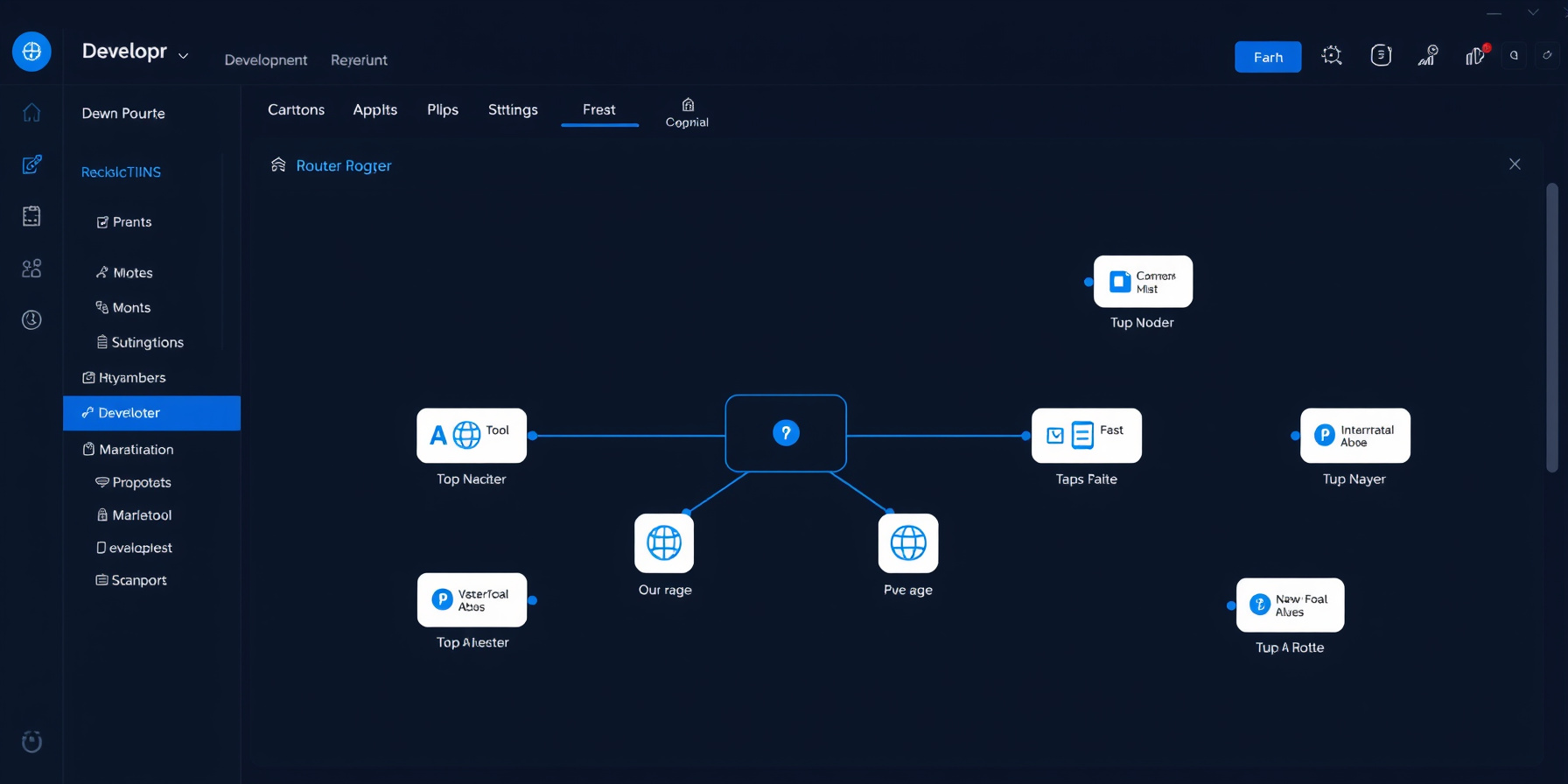
Agent-Reach’s core design decision, documented in install.md, is that it is “the selector, installer, health checker and router, never a wrapper.” After installation, agents call upstream tools directly — opencli, twitter, bili, yt-dlp, rdt, gh, mcporter — rather than routing all traffic through a proprietary middleware layer.
The agent-reach install command is check-only by default; the --system flag is required to actually install system dependencies and write skill files, as documented in both install.md and the README. The agent-reach doctor --json command reports an active_backend field, giving the agent a machine-readable view of which tool handles each platform.
The backend mapping from install.md shows explicit fallback chains: Twitter uses twitter (fallback opencli); Reddit uses opencli (fallback rdt); Bilibili uses bili, with subtitles via opencli. Directory rules confine configuration and tokens to ~/.agent-reach/; the guide forbids sudo unless the user explicitly approves and prohibits modifying system files outside that directory.
This router pattern means Agent-Reach does not sit in the data path between the agent and the content source. It selects, installs and health-checks upstream tools, and does not sit in the data path. The architectural implication is significant: Agent-Reach is not a proxy that sanitizes, filters, or rate-limits retrieved content. Whatever the upstream tool returns goes directly into the agent’s context.
What Does the Repository Actually Report?
The issues page shows 93 open issues (issues only, PRs excluded). The GitHub API reports open_issues_count of 219, a figure that includes pull requests. These are different counts: 93 is the issues-only number visible on the issues page; 219 is the API’s combined issue-and-PR count. Both are reported here without selecting one.
The CHANGELOG contains a date discrepancy that this review states without resolving: the [1.0.0] entry is dated 2025-02-24, while the GitHub API reports the repository was created on 2026-02-24 — a full year later. No explanation is offered here; the discrepancy is flagged for readers who may encounter it.
The release cadence shows a gap: the last tagged release, v1.5.0, was published on 2026-06-11, while the repository was last pushed on 2026-10-15 — roughly four months of unreleased work sitting on main. The CHANGELOG’s [Unreleased] section adds a Boss直聘 channel (via boss-agent-cli + CDP) and a four-layer read-only doctor check, alongside a fix for a Boss login-state misjudgment caused by two credential stores.
The 1.0.0 CHANGELOG entry lists 9 channels: Web, Twitter/X, YouTube, Bilibili, GitHub, Reddit, XiaoHongShu, RSS, and Exa Search. The 1.3.1 entry, dated 2026-03-27, shows the channel count grew to 11 and later 12. The llms.txt claims 15 platforms. The CHANGELOG lists 12 and llms.txt lists 15; this review does not resolve that gap.
Where Does the Dependency Churn Show Up?
Agent-Reach’s external dependency surface is substantial and has already produced visible churn. The README documents that yt-dlp was blocked on Bilibili in June 2026, and routing switched to bili-cli. A March 2026 batch of single-platform CLIs went unmaintained, forcing another routing change.
The breakage is visible in the open issue tracker. Issue #742 reports that the YouTube subtitle recipe silently returns machine translation instead of the speaker’s language — there is no -orig handling. Issue #732 documents a regression where doctor --json can hang indefinitely in v1.5.0. Issue #678 shows Twitter search failing with a ClientTransaction error, though whoami and user-posts still work. Issue #774 reports YouTube bot-challenge on servers and requests an optional hosted transcript backend. Issue #740 covers OpenCLI channels not connecting when multiple Chrome profiles are attached. Issue #803, opened 2026-10-13, flags install docs Step 2 as a no-op with a PEP 668 fallback miss.
These are not hypothetical risks — they are open issues in a repository with 97,565 stars. For systems engineers, the pattern is clear: Agent-Reach inherits the fragility of its upstream toolchain, and the README’s own documentation of the yt-dlp-to-bili-cli switch is evidence that routing changes are reactive rather than preventive.
What Does the Security Posture Look Like?
SECURITY.md establishes a vulnerability disclosure policy with private advisory reporting, acknowledgement within 48 hours, status within 7 days, and a fix timeline within 14 days. In-scope categories include auth bypass, RCE, path traversal, SSRF, injection (SQL, command, prompt), and sensitive data exposure. Vulnerabilities in dependencies are explicitly out of scope — a significant limitation given the dependency churn documented above.
Issue #802, opened on 2026-10-12, reports “[SECURITY] CRITICAL: Multiple malware-class indicators detected by SkillSpector (100/100)”. This is a reported third-party scanner finding. The status is not verified in this session — it is neither confirmed as a true positive nor dismissed. Readers should treat it as an unverified report requiring independent investigation, not as a confirmed compromise or verified supply-chain incident.
Cookie handling, per the README: cookies are stored locally only. Twitter cookies are checked by doctor, but the upstream twitter command requires TWITTER_AUTH_TOKEN and TWITTER_CT0 set in-process. Xiaohongshu cookies are not injected into OpenCLI or Chrome. This means session-based channels authenticate as the human operator — terms-of-service and account-ban risk lands on the operator’s account, not on a registered application. (This is analysis, not a statement of any specific platform’s ToS terms.)
The unfiltered-read exposure deserves attention. Because Agent-Reach is a router and not a wrapper, retrieved web text reaches the agent context without any documented sanitization layer. The SECURITY.md scope lists prompt injection as in scope for vulnerability reports, but no content-filtering mechanism is described in what was fetched. Analysis: indirect prompt injection from retrieved web content is the primary exposure, and teams deploying Agent-Reach in agent pipelines that act on retrieved content — sending messages, making transactions, modifying files — should treat untrusted retrieved text as adversarial input.
How Does Agent-Reach Compare to Alternatives?
Agent-Reach occupies a different architectural niche than managed scraping and search APIs. The table below uses only published vendor figures from Firecrawl’s pricing page, Jina Reader, and Exa’s pricing page.
| Dimension | Agent-Reach | Firecrawl | Jina Reader | Exa |
|---|---|---|---|---|
| Delivery model | Self-hosted router CLI | Managed scraping API | URL-reader/search proxy | Managed search API |
| Cost | Zero API fees for backends; ~$1/mo server proxy noted in README | Free $0 (1,000 credits/mo) to Scale $599/mo billed yearly | Optional API key for a higher rate limit | Free $10/mo credits + pay-as-you-go |
| Coverage | 15 platforms per llms.txt | Web scraping (1 credit = 1 page on basic scrape) | URL reading via r.jina.ai, search via s.jina.ai | Search from $4/1k, Contents $1/1k, Deep Search $12–15/1k, Agent $0.012–$1.00/run |
| Auth model | Operator cookies / local tokens in ~/.agent-reach/ | API key | Optional API key | API key |
| Key risk | Dependency churn, unfiltered read path | Cost scaling at volume | Rate limits not captured in this review | Per-run cost variability |
| MCP support | Via mcporter | Not covered in this review | mcp.jina.ai endpoint | MCP server access noted on pricing page |
Firecrawl’s Standard tier runs $83/mo billed yearly for 100,000 credits. Exa’s free tier provides $10/month in credits plus a $10 onboarding bonus, with per-use pricing for higher volumes. Agent-Reach’s “zero API fees” is true for the listed backends — but the README acknowledges a ~$1/month server proxy cost and notes that local machines need no proxy. Jina Reader’s rate-limit numbers were on a separate dashboard page and were not captured in this review, so no figures are stated here.
For teams already operating agent infrastructure, the comparison is not purely about cost. It is about control: Agent-Reach gives direct command-line access to upstream tools, while Firecrawl, Jina Reader, and Exa provide managed APIs with predictable — if nonzero — pricing. The tradeoff is operational burden versus vendor dependency. The GitHub REST API enforces rate limits of 60 requests/hour unauthenticated or 5,000 requests/hour with a personal token, which applies to Agent-Reach’s GitHub channel when making unauthenticated API calls.
What Should Architects Watch Before Adopting?
Three risk areas stand out for production evaluation. First, the dependency surface: yt-dlp, feedparser, and multiple external CLIs and MCP servers are supply-chain and availability dependencies. The March 2026 CLI cohort abandonment and the issues #678, #742, and #774 breakages demonstrate that this churn is already happening. Architects should have a migration plan for each backend channel.
Second, the security posture: SECURITY.md excludes dependencies from scope, yet the dependency surface is the most volatile part of the system. The SkillSpector report in #802 — unverified as of this writing — illustrates the kind of third-party scrutiny the repository is attracting. Teams should run their own dependency audits rather than relying on upstream assurances.
Third, the unfiltered read path: because Agent-Reach does not sit between the agent and the content source, no sanitization layer is documented. Architects building agents that take actions on retrieved content should implement their own output filtering, prompt-injection defenses, and sandboxing at the application layer. Teams using the GitHub channel should also be aware that GitHub’s REST API rate limits — 60 requests/hour unauthenticated, 5,000 requests/hour authenticated — may constrain high-volume automated access.
The Bottom Line
Agent-Reach is a router toolkit that simplifies multi-platform agent wiring at the cost of significant dependency and security surface area. It is a strong fit for teams that need rapid channel coverage and can absorb upstream churn through their own monitoring and migration processes. The four-month release gap, open breakage issues, and unverified security scanner report warrant careful evaluation before production deployment in agent pipelines that act autonomously.
FAQ
Is Agent-Reach a proxy that sits between my agent and web content?
No. Per the install documentation, Agent-Reach is “the selector, installer, health checker and router, never a wrapper.” After installation, agents call upstream tools directly. Retrieved content reaches the agent context unfiltered — no sanitization middleware is documented. Teams needing content filtering must implement it at the application layer.
What is the current issue count?
The issues page shows 93 open issues (issues only). The GitHub API reports open_issues_count of 219, which includes pull requests. The API figure includes pull requests, so the two counts measure different things. This review does not derive a pull-request count from them.
Does Agent-Reach have a security advisory process?
Yes. SECURITY.md specifies private advisory reporting with acknowledgement within 48 hours, status within 7 days, and fix timeline within 14 days. In-scope includes auth bypass, RCE, path traversal, SSRF, injection (including prompt injection), and sensitive data exposure. Dependencies are explicitly out of scope.
📖 Related Reads
- ToolBrain — tool reviews, LLM comparisons, and AI workflow guides
- NiteAgent — AI agent development, frameworks, and production patterns
- Hermes Tutorials — Hermes Agent setup, configuration, and advanced workflows
Cross-links automatically generated from CodeIntel Log.