Contents
Paperclip is an open-source TypeScript platform for orchestrating teams of AI agents, and it targets a problem that appears once an organization runs more than one agent at a time: coordination. This review treats it as a systems design question, focusing on the control-plane layer, its trust boundaries, and the adoption risks an engineering lead should weigh before depending on it.
How This Review Was Researched
This review is based on the repository source, README, documentation, and issue tracker — we did not run it hands-on. Canonical metadata (stars, forks, open issues, language, license, creation date) was verified directly against the GitHub API on 2026-10-08, and every external link in this post returned HTTP 200 at publication time. Last reviewed: October 2026.
What Paperclip Is — and What Problem It Targets
Per the repository, Paperclip is an open-source Node.js server and React UI that orchestrates a team of AI agents to run a business. It is not another coding agent or LLM gateway; the README’s own framing is “If OpenClaw is an employee, Paperclip is the company” — a control plane that intakes goals, delegates them to swappable agent runtimes, tracks cost, and keeps task state durable and auditable. It was created 2026-03-02 under MIT.
The project describes itself as “the app people use to manage AI agents for work.” The universal phrasing is marketing. The verified metadata supports a narrower claim: 98,942 stars, 16,701 forks, and 6,243 open issues and pull requests combined as of 2026-10-08, with TypeScript as the primary language and a homepage at paperclip.ing. The maintainers report having merged over 2,700 pull requests — a signal of unusually fast iteration for a project created in March 2026.
The distinction matters for build-versus-adopt decisions. A coding agent answers “how does code get written.” A gateway answers “how do I reach models reliably and cheaply.” A control plane answers “who may do what, on whose behalf, and how do we prove it afterward.” The README explicitly claims the third category: “Paperclip is a full control plane, not a wrapper.”
The Control-Plane Gap: Why Agent Fleets Break Without Orchestration
Engineers building agent systems do not lack model capability; they lack fleet coordination. Many concurrent agent sessions scatter across terminals, IDEs, CI, and cron, each with isolated transcripts, ambient credentials, and no shared handoff contract. Paperclip’s README targets exactly this: the “20 Claude Code tabs open” problem, where on reboot you lose everything (README).
The failure is operational. A terminal transcript, an IDE thread, and a cron job that writes to a file are three sources of truth, and none of them is a shared task object. A handoff becomes a copy-paste of context, and “which agent changed this, and under whose authority” has no single answer.
Three properties break first. Durability fails when a session crashes, because work-in-progress lives in a transcript that is not a state machine. Credentials fail when ambient shell or IDE access makes every agent as powerful as the person who launched it. Approval fails in both directions: humans either watch every step, which does not scale, or approve nothing, which does not survive production systems.
Architecture Overview: Adapters, Heartbeats, and Durable Tasks
Paperclip layers a TypeScript orchestration server over agent runtime adapters, a governed MCP tool gateway, and an embedded PostgreSQL storage layer (external Postgres in production) (installation guide). The task record — not the chat transcript — is the source of truth. Agents stay external: Claude Code, Codex, CLI agents such as Cursor and Gemini, and HTTP/webhook bots such as OpenClaw are all just workloads that “receive a heartbeat,” and the adapter overview documents how each maps onto the orchestration contract.
The server itself decomposes into twelve subsystems: Identity & Access, Work & Tasks, Heartbeat Execution, Governance & Approvals, Org Chart & Agents, Workspaces & Runtime, Plugins, Budget & Costs, Routines & Schedules, Secrets & Storage, Activity & Events, and Company Portability (per the README’s architecture diagram). Heartbeat Execution is the interesting one for harness engineers: a database-backed wakeup queue with coalescing, budget checks, workspace resolution, secret injection, and skill loading, producing logs, usage records, and adapter-specific session state per run. Bounded recovery handles supported failures and surfaces the rest to humans — an explicit design admission that not every failure can be auto-remediated.
Two mechanisms deserve attention. Atomic task checkout — a single assignee plus execution locks prevents competing runs from claiming the same task — is the distributed-systems primitive most homegrown agent dashboards skip. Session persistence means supporting adapters resume saved sessions across runs, so a reboot does not destroy in-progress work. One runtime-dependent caveat: lifecycle semantics are only as consistent as each adapter’s mapping, and the docs do not guarantee that “suspend” means the same thing on every runtime — verify the semantics of your specific adapter before building against them.
Security and Credential Scoping: The Confused-Deputy Problem
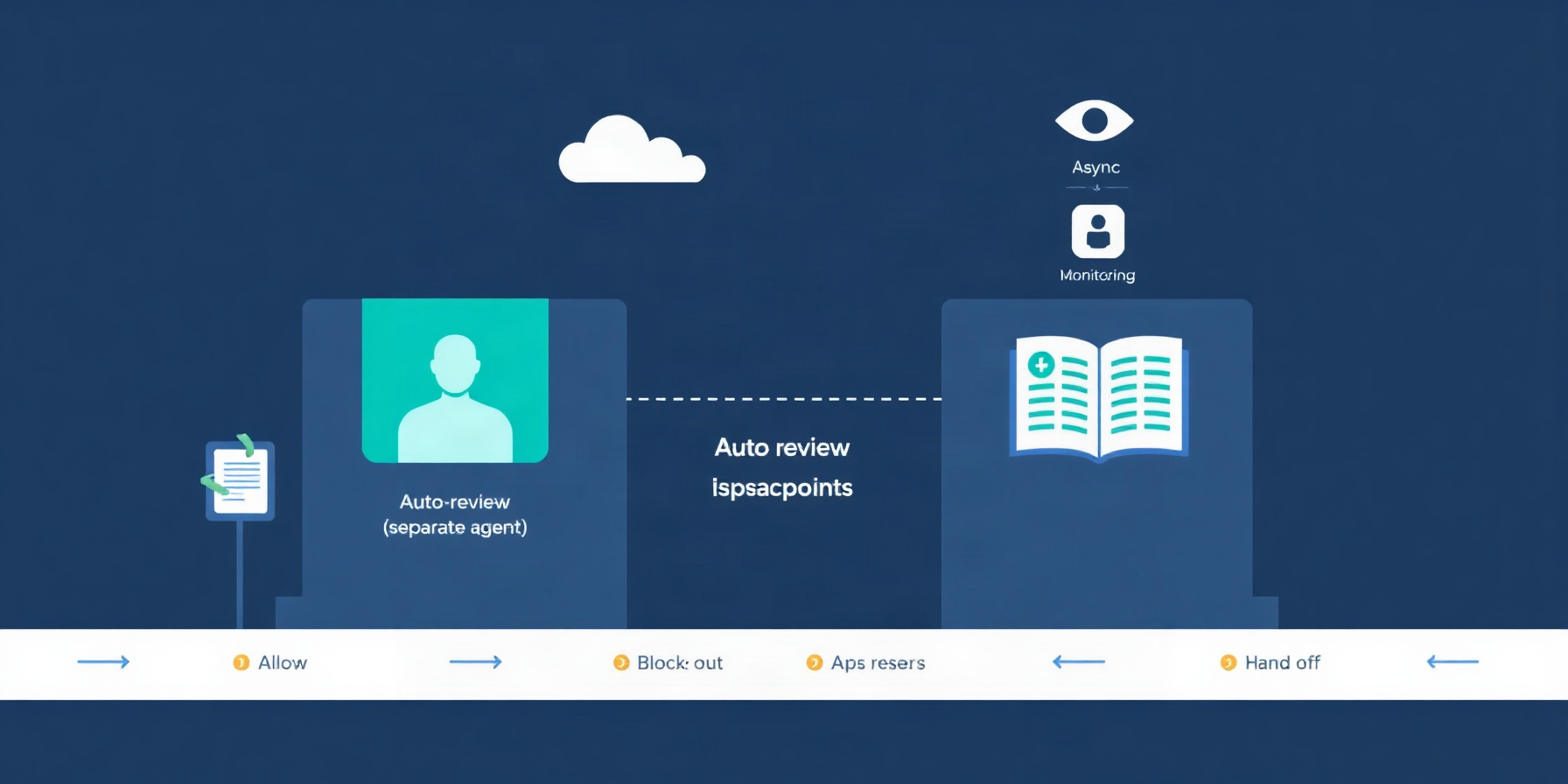
Agents act as confused deputies: they hold authority and can be steered into misusing it. Paperclip’s documented model keeps credentials out of agent reach through an encrypted secrets manager with per-person and per-agent access, where secret references supply credentials to authorized runs “without copying values into ordinary agent configuration” (README). Gateway actions are configured per connection as Allowed, Ask first, or Off — a three-tier policy rather than a binary gate.
Coding agents are a sharp instance of the pattern. They read untrusted content such as issues, web pages, and dependency READMEs, they hold tool authority, and that content can steer them. Keeping secrets out of agent configuration bounds what a prompt injection can exfiltrate. Scoping matters too: agent API keys and short-lived run JWTs mean a compromised session does not hold the operator’s identity indefinitely, and responsible-user attribution follows work through delegation.
Each control has a cost. Every gateway action becomes a policy decision point, which adds latency and a dependency on the control plane’s availability. Approval gates add human wait time, and — per the README’s own roadmap — the team is still shipping toward fuller autonomy (Memory/Knowledge and Agent Chat are marked in-progress). A useful due-diligence question: what happens to issued run JWTs when a task is paused or terminated mid-flight? The docs describe bounded recovery, but the exact credential-revocation semantics on abnormal termination are not spelled out.
State Model, Auditing, and Approval Gates
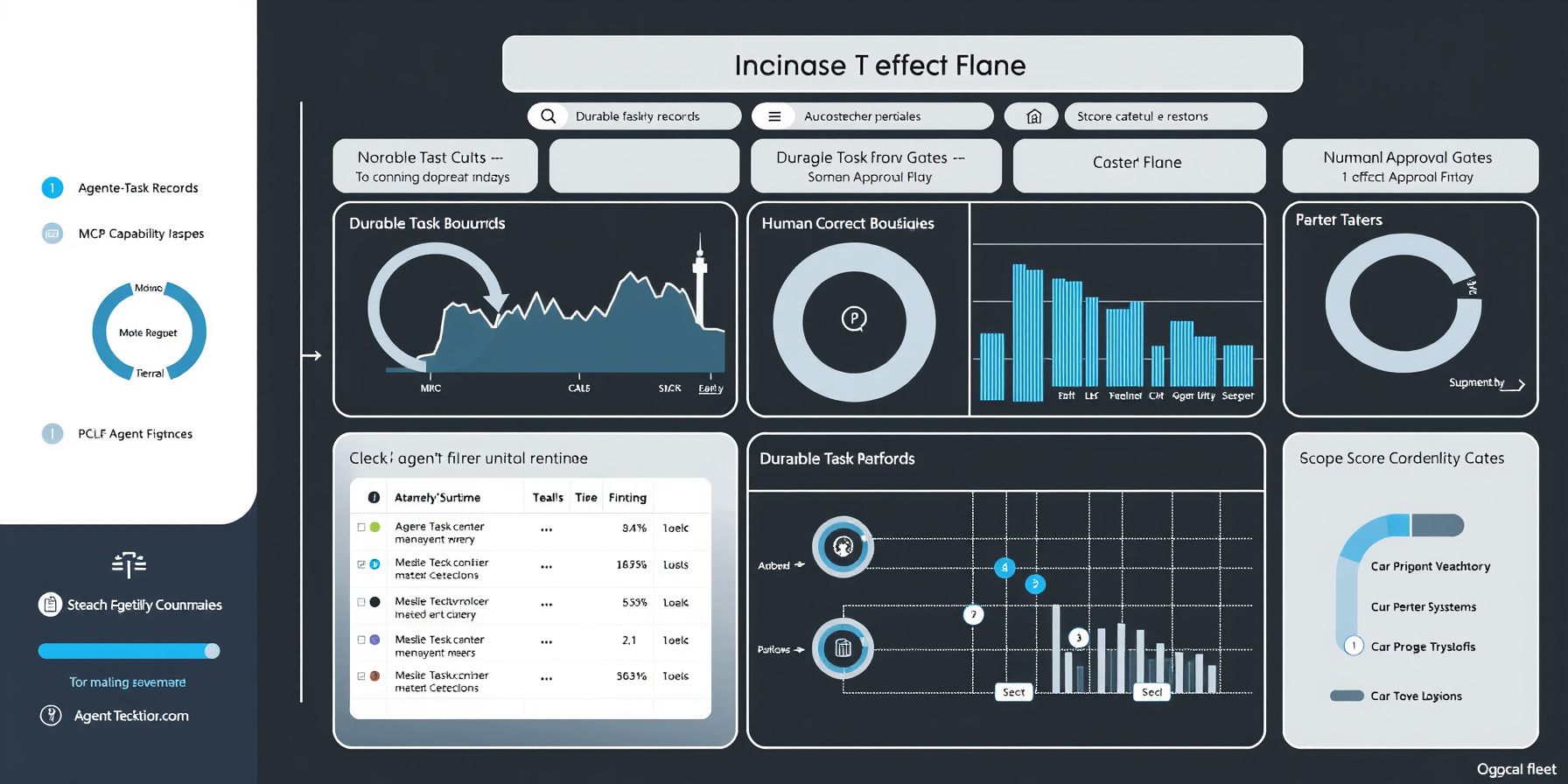
Paperclip records mutating actions, heartbeat state changes, cost events, approvals, comments, and work products as a durable activity log, “so operators can audit what happened and why” (README). Approval is modeled as a first-class workflow — board approval flows, execution policies with review stages, decision tracking, and budget hard-stops — rather than a comment in a thread, which makes an agent’s pause visible to schedulers, dashboards, and auditors.
An append-style activity history answers historical questions without trusting current state: who approved what, at which budget level, under which policy. Governance extends to revisioned configuration — config changes are revisioned and bad changes can be rolled back, which matters when a misbehaving agent edits its own operating parameters. Budget enforcement is honest about its limits: hard stops use recorded spend, and the README warns that usage reporting and in-flight work can delay a stop. That is the right way to document a best-effort control — stating the failure window instead of implying real-time enforcement.
The cost is that event shapes become long-lived. Schema changes need a migration story because old history must remain readable. A useful evaluation test — one this review did not perform — is to interrupt a running agent mid-task, restart the control plane, and check whether the record explains exactly what happened.
Tradeoffs and Adoption Signals for Engineering Teams
The GitHub API snapshot (2026-10-08) shows 98,942 stars, 16,701 forks, and 6,243 open issues and pull requests combined. Stars suggest broad interest; forks suggest teams are embedding or modifying the code. Combined with the maintainers’ 2,700+ merged PRs, the picture is a project moving very fast — which is both the appeal and the risk for teams that need predictable interfaces.
Stars measure attention, not production use. Forks measure interest in running or changing the code, not deployment. A backlog of 6,243 open issues and PRs on a project created 2026-03-02 suggests reports arrive faster than they close. That is common in hypergrowth projects and a real risk signal for teams that need SLAs: check how quickly your class of bug gets fixed before betting production infrastructure.
The license and language remove two common barriers. MIT permits internal modification without copyleft obligations, and TypeScript is familiar to most platform teams, which makes patching plausible. The self-hosting story is deliberately low-friction: npx paperclipai@latest onboard --yes provisions an embedded PostgreSQL instance, and the README states “Open source. Self-hosted. No Paperclip account required.” A managed cloud exists but is waitlisted — the open-source deployment is the primary artifact, not a demo tier.
Practical guidance: pin versions instead of tracking a moving branch (the installation guide supports pinned installs and rollback); keep the adapter layer behind your own interface so a runtime change does not force a control-plane change; and note that usage telemetry is enabled by default — disable it with PAPERCLIP_TELEMETRY_DISABLED=1 or DO_NOT_TRACK=1 if that matters in your environment.
Paperclip vs Alternatives: Control Plane Versus Observability
Raw agent CLIs, LLM gateways, and observability dashboards solve adjacent problems but lack fleet semantics. Gateways handle model access; dashboards record what agents did; raw CLIs remain single-session. Paperclip’s differentiator (see paperclip.ing) is controlling what agents may do through task-first state, governed tool access, and first-class approval loops.
| Dimension | Paperclip | Raw agent CLIs / IDE UIs | LLM gateways / routers | Observability dashboards |
|---|---|---|---|---|
| Primary role | Task-first control plane; MIT-licensed TypeScript | Run a single agent session interactively | Route and meter model API calls | Record and visualize agent and model activity |
| Durable unit of work | Task record with atomic checkout and execution locks | Session or chat transcript | Individual request and response | Trace or log |
| Agent lifecycle control | Heartbeat wakeups, pause/resume/terminate, session resume across runs | Start and stop the session | Outside core scope | Read-only visibility |
| Human approval gate | Durable approval workflows with decision tracking | Per-action prompts, not shared state | Outside core scope | Post-hoc review only |
| Credential scoping | Encrypted secrets manager, per-agent access, short-lived run JWTs | Ambient shell or IDE credentials | Provider keys held by the gateway | Generally outside scope |
| Cross-agent handoff | Org-chart delegation with goal ancestry | Manual copy-paste | Outside core scope | Outside core scope |
| Cost control | Budgets by company/agent/project with alerts and hard stops | Usually provider-side billing | Per-request usage metering | Usage and trace records |
| Best for | Teams coordinating many agents with audit and budget requirements | One developer in one session | Model access, routing, and spend control | Post-hoc analysis and debugging |
The table compares product categories, not specific vendors, and it benchmarks none of them. The Paperclip column reflects the README’s documented behavior: task-first state, an MCP tool gateway with per-action policy, licensing, and durable activity logging.
What AI-Systems Engineers Should Actually Learn From Paperclip
Paperclip is a useful reference point for agent orchestration design. The atomic task checkout, governed MCP tool gateway, org-chart delegation with goal ancestry, and budget hard-stops are patterns worth copying even in custom systems. Its MIT TypeScript codebase is a candidate for studying lifecycle semantics across heterogeneous agent runtimes.
Even teams that never adopt Paperclip can borrow four patterns. Keep intent, state, and history in a durable task object and treat the chat transcript as a log. Route agent actions through a narrow, policy-checked capability interface so credentials never enter agent context. Carry scope, budget, and provenance in handoff envelopes rather than free-form context — Paperclip encodes this as goal ancestry on tasks and projects. Model approval as a durable state with decision tracking, not an interruption.
Each pattern has a test. Can you reconstruct from storage alone who authorized the last destructive action? Can an agent’s credential be revoked without restarting its session? Does a handoff carry the constraints the receiving agent must respect? A no to any of these means the control plane is missing a layer, whichever product you choose.
For custom harnesses, the most transferable lesson is separation. The orchestration server, adapters, governed tool gateway, and store are distinct responsibilities — twelve subsystems in the README’s diagram, each independently replaceable. Collapsing them into one agent loop is how many fleet systems become unauditable.
The Bottom Line
Teams already running several heterogeneous agents — and needing durable task state, approval records, and budget enforcement — should evaluate Paperclip seriously, and AI-systems engineers should study its design even if they build their own. Watch the 6,243 open issues and PRs, the project’s short history since its 2026-03-02 creation, and whether its governance claims hold under your own review of the source code.
FAQ
Is Paperclip mature enough for production?
Paperclip is young — created 2026-03-02 — but adoption is strong: 98,942 stars and 16,701 forks by 2026-10-08, with 2,700+ merged PRs. The main maturity risk is the 6,243 open issues and PRs, which suggests triage lag. Pin versions, read the tracker, and treat it as a fast-moving surface rather than a frozen dependency.
How does Paperclip keep agent credentials safe?
Per the README, credentials live in an encrypted secrets manager with per-person and per-agent access; secret references supply credentials to authorized runs without copying values into agent configuration. Gateway actions are governed per connection as Allowed, Ask first, or Off, and runs use short-lived JWTs rather than standing operator authority.
How is this different from LLM observability tools?
Observability tools record what agents did; Paperclip controls what agents may do. Its durable unit is the task record with atomic checkout, not a trace, and it includes approval workflows, budget hard-stops, credential scoping, and org-chart delegation. Observability is post-hoc visibility; Paperclip is a control plane with audit consequences.
📖 Related Reads
- NiteAgent — AI agent development, frameworks, and production patterns
- ToolBrain — tool reviews, LLM comparisons, and AI workflow guides
- NoCode Insider — AI workflow automation with no-code tools, agents, and APIs
- Hermes Tutorials — Hermes Agent setup, configuration, and advanced workflows
Cross-links automatically generated from CodeIntel Log.