Contents
The Week in One Paragraph
This week moved three coordinates for agent builders at once. OpenAI’s DevDay 2026 shipped always-on agents, a cheaper near-frontier coding model, and a new speed tier; the Terminal-Bench team published Terminal-Bench 4.0, a lower-noise benchmark with explicit semantic versioning; and Anthropic released Claude Sonnet 5.5 while opening a $100M deployment-talent pipeline. The through-line: coding-agent economics, evaluation defaults, and deployment staffing all changed in the same seven days — while OpenAI deliberately kept GPT-6.1 Astra unreleased.
OpenAI DevDay 2026: Dots, GPT-6.1 Sol, and Ultrafast
OpenAI’s DevDay on September 29, 2026 carried more than 20 major announcements, led by Dots — always-on personal agents powered by GPT-6 Astra, each with its own cloud computer and connections to 4,000+ apps via plugins, reachable through ChatGPT, Slack, Teams, or voice. GPT-6.1 Sol shipped the same day at $2.00/M input, $0.10/M cached input, and $10.00/M output.
- Dots roll out on Pro, Business Premium, and Enterprise (beta). Enterprise, Edu, and Healthcare workspaces have them off by default until an admin enables them; conversations with a dot do not count against ChatGPT usage limits, though Codex and ChatGPT Work tasks it triggers do. Introducing dots
- GPT-6.1 Sol is described by OpenAI as a major upgrade to GPT-6 Sol with exceptionally strong agentic-coding performance — near-Astra intelligence at one-fifth of Astra’s standard input and output token prices. Its self-reported DeepSWE 1.1 score is 0.7522 at high effort (tracked by LLM Stats); treat vendor self-reports as claims to reproduce, not independent verification. Codex 0.159.1 made it the default model in the bundled catalog and Amazon Bedrock Mantle/Runtime catalogs. DevDay 2026 recap
- Ultrafast is a premium speed tier: up to 8x faster token generation — 300 tokens per second — in Codex and 6x in the API. GPT-6 Astra Ultrafast is available today in the API and in ChatGPT Work/Codex on Pro 500 and Enterprise. The new Pro 500 tier carries the highest usage allowance (25x ChatGPT Plus) and includes Ultrafast; third-party reporting places it at $500/mo. Also announced: Codex in the cloud, Codex Security Cloud, the Decisions API, and the Agents API public beta. DevDay 2026 recap
What This Changes:
- A silent default-model swap in Codex catalogs is a supply-chain event for agent harnesses: pin model ids explicitly and re-run regression suites after catalog updates, because “no config change” no longer means “same model.”
- Sol at $2/$10 with Astra-class coding performance makes cost-sensitive agent loops viable without dropping to toy models; route Sol for volume, Astra Ultrafast for latency-critical edit-verify cycles (DevDay recap).
- Dots make tool permissions and long-lived agent state first-class: plugin scope, cloud-computer access, and admin enablement are deployment prerequisites in managed tenants, not afterthoughts.
Terminal-Bench 4.0: Less Noise, Explicit Versions
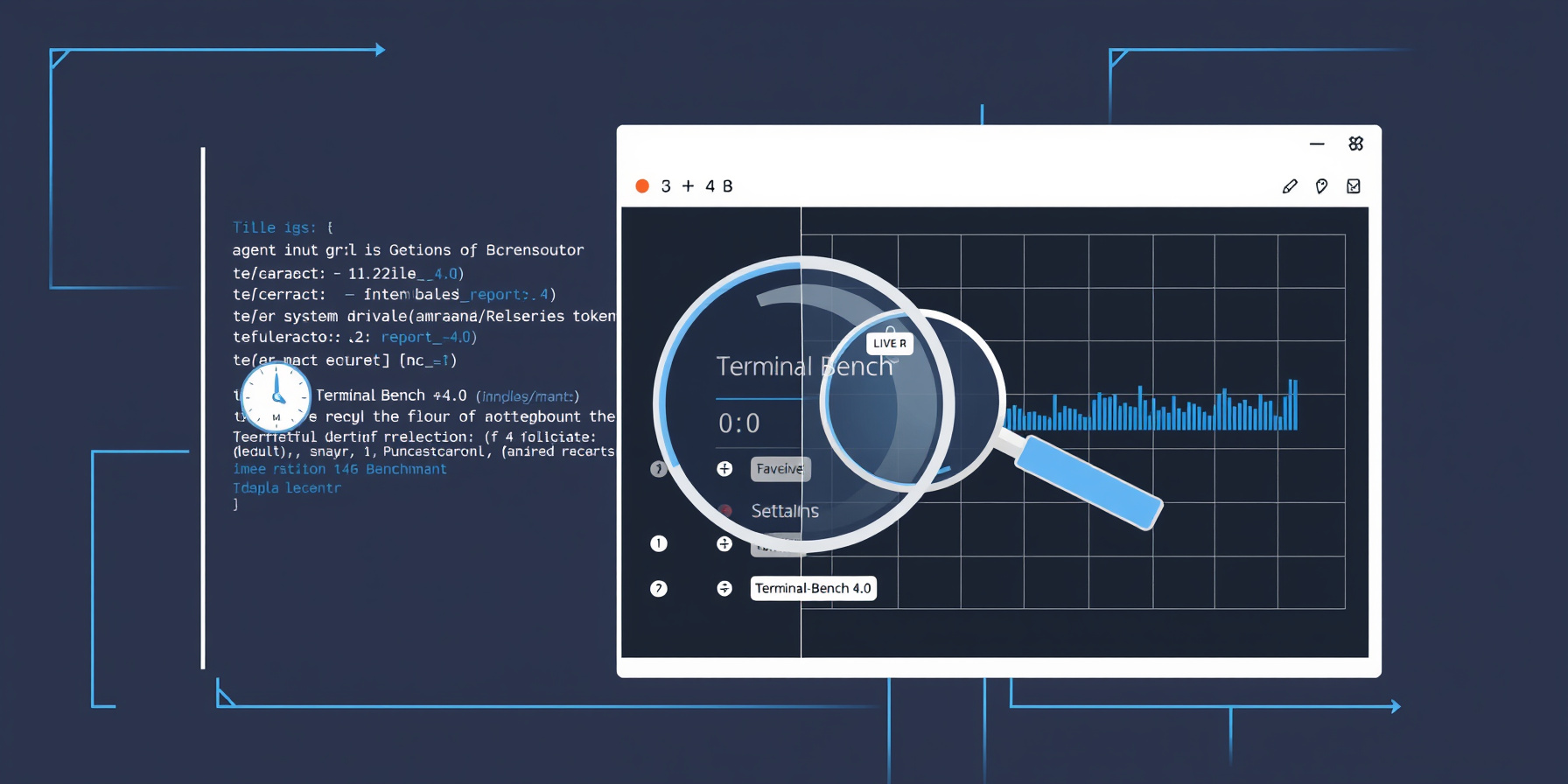
The Terminal-Bench maintainers published version 4.0 of the dataset and leaderboard this week: 66 tasks with calibrated time, CPU, and memory resources, task fixes, and saturated tasks removed. Fewer agent timeouts and errors than 3.0 reduce measurement noise; the remaining errors are largely model refusals and output-token-exceeded failures.
- Resource calibration makes the agent environment part of the benchmark contract: reproducing a score now requires matching the calibrated resources, not just the model and harness. Terminal-Bench 4.0
- Semantic versioning for benchmarks is now explicit: bumping x forces a rerun (agent-environment changes), y a regrade (verifier changes), z a metadata reuse. Roadmap milestones are live: TB 4.1 targets tamper-resistant verifiers; TB 5.0 adds new tasks. Terminal-Bench 4.0
- Public TB4.0 top rows: GPT-6 Astra (max) on Codex at 58.2% ±2.8; Fable 5.1 (max) on Claude Code at 57.9% ±3.8; Opus 5 (xhigh) 53.9%; GLM-5.3 41.8%; Grok 4.7 37.6%. Effort setting is part of the score identity. Terminal-Bench leaderboard
- Caveat: Anthropic’s Sonnet 5.5 page reports 70.6% on “Terminal-Bench 4.0,” while the public tbench board shows different numbers and effort settings. This is a provider-run vs public-run discrepancy — flag it, do not resolve it from public data.
What This Changes:
- Log agent-environment version alongside model version in every eval run: an x-bump invalidates historical scores even when the model is unchanged, and y-bumps can reorder ranks without any task change.
- Provider-run scores may use effort settings that differ from public rows; procurement should request harness configuration before comparing numbers across sources.
- Output-token-exceeded as a top error class means token budgets and truncation policy are evaluation variables — isolate them or your regression numbers measure your harness, not the model.
Claude Sonnet 5.5: Faster, Cheaper, With a Benchmark Caveat
Anthropic released Claude Sonnet 5.5 on September 28, 2026 — the second model in the Claude 5.5 family. It runs 30%+ faster than Sonnet 5 and costs up to 30% less for most work, because it typically needs far fewer tokens to do the same task at identical per-token pricing.
- Pricing matches Sonnet 5: $2/M input, $10/M output, $0.20/M cache reads. Model id
claude-sonnet-5-5, available on AWS, Google Cloud, and Azure, with zero data retention available. Claude Sonnet 5.5 - Anthropic reports 70.6% on Terminal-Bench 4.0 (provider-run) versus Sonnet 5’s 10.3%; two points below Opus 5.5 on GDPval-AA; FrontierCode 1.1 Main 46.2% (Max) / 52.1% (Xhigh); CursorBench 4.0 55.5%; Humanity’s Last Exam 64.5% with tools; OSWorld 2.1 80.1% partial. Read these against the effort-setting caveat above. Claude Sonnet 5.5
- It is the first Sonnet to beat Pokémon Red working only from screenshots, and the first Sonnet to launch with cyber safeguards and fallbacks of the class Anthropic builds for its most capable models. Thinking-off users must switch to the new
between_toolssetting before migrating. Claude Haiku 5.5 “will join the Claude 5.5 family in the coming weeks.” Claude Sonnet 5.5
What This Changes:
- The
between_toolsmigration is a breaking configuration change for thinking-off agent stacks: pinclaude-sonnet-5-5and test tool-call boundaries before rolling forward. - Anthropic positions Sonnet 5.5 for well-scoped everyday tasks — bug fixes, polished documents — while Opus 5.5 keeps the complex, open-ended work; that split is a routing template for harness builders, not a one-model replacement.
- Frontier-class cyber safeguards can change refusal behavior on security-adjacent coding tasks; keep fallback prompts or models ready for workflows that trip the safeguard layer.
Claude Frontier Academy: A $100M FDE Pipeline
Anthropic launched the Claude Frontier Academy on October 2, 2026: a $100M commitment to train 10,000 Frontier Deployed Engineers by the end of 2027 (announcement). The 12-week residency follows a medical-training model — multi-day in-person program, graded practical, Claude Resident Engineer badge, residency, then FDE badge — with first badges expected in early 2027.
- First cohorts draw engineers from Accenture, Bain, Capgemini, Commonwealth Bank of Australia, Deloitte, McKinsey, Morgan Stanley, and Novo Nordisk; the program runs in San Francisco, New York, and London, and participation is by nomination. Claude Frontier Academy
- It builds on the Claude Partner Network: professionals across 46,000 firms have earned more than 175,000 Claude certifications, and nearly 4,000 people have completed Basecamp. Claude Frontier Academy
What This Changes:
- This expands enterprise deployment capacity rather than model capability: the scarce resource shifts from model access to trained operators who can take agentic systems to production inside large organizations.
- If you sell or staff AI-engineering services, expect FDE-badged teams to become a procurement checkbox through 2027; if you buy, the badge gives you a screening signal before the first invoice.
- The residency’s assessment structure — graded practicals on realistic cases — is a reusable template for internal agent-ops enablement programs.
Tooling and Pacing: Claude Code 2.1.288, Codex 0.160.0, a Held-Back Model
On October 2, Anthropic shipped Claude Code 2.1.288 and OpenAI shipped Codex 0.160.0 — both reliability releases for long-running agent sessions. Separately, OpenAI confirmed it will not release GPT-6.1 Astra, its next model, after it failed to meet the company’s safety bar.
- Claude Code 2.1.288: mid-response API timeouts no longer fail the turn — non-interactive sessions and subagents continue from the partial response; a fix for long conversations failing with “Prompt is too long” instead of auto-compacting; an MCP OAuth re-auth prompt mid-tool-call; a
--max-findingsflag for/code-review; and an unattended-session watchdog that gives up after three timeouts. Claude Code changelog - Codex 0.160.0: agent command center history browsing, projectless sessions with workspace defaults, and opt-in Guardian review capabilities that can retrieve earlier user instructions and agent-handoff context. Codex releases
- GPT-6.1 Astra was held back on safety pacing. OpenAI CFO Sarah Friar told CNBC: “When we have to pace the frontier, we’ll do that.” CNBC DevDay live blog
What This Changes:
- Mid-response timeout continuation changes failure semantics: partial output is now recoverable state, so harnesses should persist partials and resume rather than restart a turn from scratch.
- The watchdog cap prevents infinite retry loops in unattended sessions but shifts the burden to you — add external alerting or the session dies silently after three timeouts.
- A held-back frontier model makes model-availability an explicit roadmap variable: benchmark-driven architecture decisions now need a fallback lane for the case where a planned model simply does not ship.
The Bottom Line
The week’s signal is that agent infrastructure matured faster than model capability. GPT-6.1 Sol and Sonnet 5.5 moved cost and latency curves rather than capability ceilings; Terminal-Bench 4.0 spent its version bump on measurement hygiene instead of new hard tasks; Claude Code and Codex shipped reliability fixes for long-running sessions; and the two labs diverged on release philosophy — OpenAI publicly pacing its frontier, Anthropic building a deployment-talent pipeline. The open problem is comparability: provider-run scores and public leaderboard rows still do not line up, and the burden of reconciling them now sits with the teams building the harnesses. Pin model ids, log effort settings and environment versions, and route on your own cost-per-successful-task numbers.
Frequently Asked Questions
Why does Terminal-Bench 4.0 show different numbers from Anthropic’s Sonnet 5.5 page?
Anthropic reports 70.6% provider-run on Terminal-Bench 4.0, while the public tbench.ai board lists different figures and effort settings. The cause is not established from public data — the rows may reflect different effort configurations. This briefing flags the discrepancy rather than resolving it and treats provider-run scores as claims to reproduce.
What is the practical difference between GPT-6.1 Sol and GPT-6 Astra Ultrafast?
GPT-6.1 Sol is a lower-cost model with near-Astra coding performance at one-fifth of Astra’s input/output prices, suited to high-volume agent loops (OpenAI). Astra Ultrafast prioritizes latency — up to 8x faster generation, 300 tokens per second in Codex. Route by cost or latency per workload rather than standardizing on one default.
Does Claude Frontier Academy change how teams buy AI engineering services?
It creates a credentialed pipeline — 10,000 Frontier Deployed Engineers by end-2027, badges expected early 2027, first cohorts from eight named enterprises and consultancies. Near-term impact is limited because the program is by nomination; over time, expect FDE-badged teams to appear in enterprise procurement criteria.
How This Briefing Was Researched
Desk research only, conducted 2026-10-03 on official pages named in each section. No hands-on testing or API evaluation was performed. All cited links were verified returning HTTP 200 at fetch time. Provider-run benchmark results are labeled as such, and the Terminal-Bench 4.0 discrepancy between Anthropic’s page and the public leaderboard is flagged rather than resolved.
📖 Related Reads
- ToolBrain — tool reviews, LLM comparisons, and AI workflow guides
Cross-links automatically generated from CodeIntel Log.